Losing a tooth, or several teeth, changes things. Chewing is not as easy, and smiling doesn’t feel as natural. And suddenly, everyday things like eating an apple or laughing at a friend’s joke come with a little hesitation. But there are excellent options for replacing missing teeth. The trick is figuring out which one fits your life, your budget, and your long-term goals.
At Frederick Center for Dentistry in Frederick, MD, patients have choices. Two of the most common are dental implants and modern dentures. Both work, but they work very differently. Dr. Sahil Goyal, Dr. Anshu Goyal, and Dr. Scott Bowersox are here to help you understand your options so you can make the best decision for your smile.
Dentures: The Tried-and-True Option
Dentures have been around a long time, and for good reason. They are a reliable way to replace multiple missing teeth without surgery.
Full dentures replace an entire arch of teeth. They rest on the gums and stay in place with suction or adhesive. Partial dentures fill in gaps when some natural teeth remain. They clip onto nearby teeth for support.
The biggest advantage is that dentures are more affordable upfront. They also don’t require surgery. This makes them a good fit for patients who are not candidates for implants or who prefer a less invasive route.
But dentures come with trade-offs. They can slip or click while eating and talking. They need to be removed for cleaning. And over time, the jawbone underneath shrinks because it’s no longer being stimulated by tooth roots. That can change how dentures fit. You may need adjustments or replacements later.
Patients from Walkersville, Middletown, and throughout Frederick County have found dentures to be a practical solution. However, many also experience the frustration of a loose fit over time. That’s where dental implants can offer a more permanent alternative.
Dental Implants: A Permanent Solution
Implants take a different approach. Instead of resting on the gums, they replace the tooth’s root too.
A small titanium post goes into the jawbone. Over a few months, the bone fuses with the post through a process called osseointegration. That creates a stable foundation. Then a custom crown goes on top. The result feels and functions like a natural tooth. No slipping, no adhesives, and no special cleaning routine beyond brushing and flossing normally.
Implants also preserve the jawbone. The bone stays stimulated and healthy because the implant acts like a natural root. That means your face keeps its natural shape. You will not develop the sunken look sometimes seen with long-term denture wearers.
Dr. Scott Bowersox is our dedicated implant specialist. He has advanced training in surgical implant placement. Dr. Sahil Goyal and Dr. Anshu Goyal are experts in restorative dental solutions. Together, they ensure your entire implant journey happens under one roof with a coordinated team approach.
The catch is that implants cost more upfront, and they take longer to complete. Surgery is involved, and not everyone is a candidate. Patients need enough bone density to support the post, though bone grafting can sometimes help.
What About Implant-Supported Dentures?
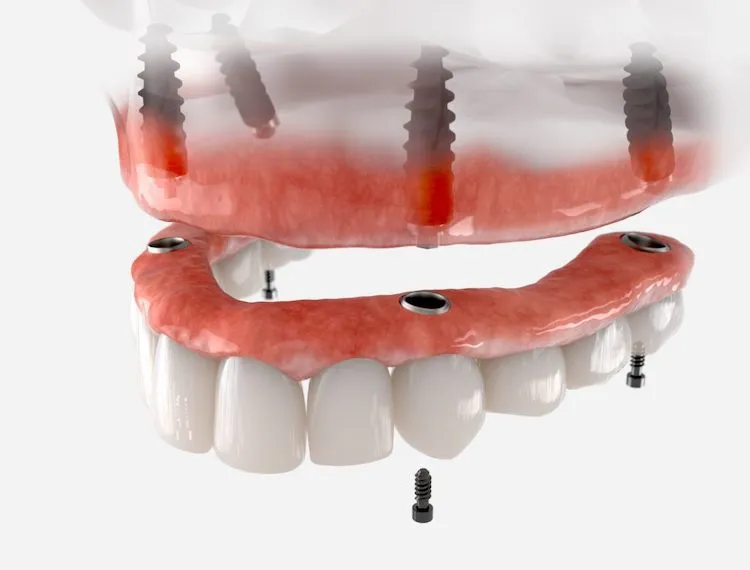
For patients who want the stability of implants but need to replace a whole arch, implant-supported dentures offer a middle ground. A few implants anchor a denture securely in place. It doesn’t slip, but it can still be removed for cleaning.
This option gives patients the best of both worlds. You get the affordability and convenience of a denture with the staying power of implants.
Implant-supported dentures are also called “snap-on dentures.” They offer more stability because we secure them using implant posts in your upper or lower jaw. You don’t have to worry about your restoration slipping or falling out. You can eat your favorite foods with confidence.
How to Decide
There’s no single right answer for everyone. It comes down to a few key questions:
- How many teeth are missing? A single missing tooth is usually better suited for an implant. Multiple missing teeth could go either way.
- What’s your budget? Dentures are easier on the wallet upfront. Implants cost more but last for decades. With proper care, the titanium implant post can last a lifetime. The crown may need replacement after 10 to 15 years of normal wear.
- Is surgery an option? Some patients are not comfortable with surgery or have health conditions that make it riskier. Others are fine with the procedure and prefer the long-term benefits.
- What are your long-term goals? Patients who want a once-and-done solution lean toward implants. Those who prefer flexibility and lower cost lean toward dentures.
- Do you have enough bone? Implants require sufficient bone density. If you have been missing teeth for a long time, you may have experienced some bone loss. We offer bone grafting procedures to build up your jawbone. After grafting, you will wait 4-6 months for healing before implant placement.
Cost Comparison: What to Expect
At Frederick Center for Dentistry, we believe in transparency. Here is what you can generally expect for costs:
| Option | Typical Cost Range | Longevity | Pros | Cons |
|---|---|---|---|---|
| Traditional Dentures | $1,000 – $3,000 per arch | 5-10 years | Lower upfront cost, no surgery | Can slip, requires adhesives, bone loss over time |
| Implant-Supported Dentures | $5,000 – $15,000 per arch | 10-20+ years | Stable, preserves bone, no adhesives | Higher cost, surgery required |
| Single Dental Implant | $3,000 – $5,000 | Lifetime (post) | Permanent, natural feel, no bone loss | Higher upfront cost, surgery required |
Note: These are estimates based on industry averages before insurance. Your final cost depends on your specific case and the materials selected.
We make implants and other restorative treatments affordable with:
- In-network insurance coverage. We accept Cigna, CareFirst, Delta, Aetna, and MetLife. Our team will verify your benefits and file claims on your behalf.
- CareCredit financing. Interest-free payment plans for qualified patients.
- In-house payment plans. Flexible options designed to fit your budget.
What If You Have Gum Disease or Need a Tooth Extraction?
If you require gum disease treatment, periodontal therapy, or a tooth extraction before restorative treatment, we treat those issues first. We want to ensure your teeth and gums are healthy enough for successful treatment.
Active gum disease must be treated before implant placement. We offer periodontal therapy to first get your gums healthy. Once your gums are healthy, you can proceed with implants.
One of the requirements for dental implants is sufficient bone structure to support them. If you don’t have enough bone, we recommend a bone graft. That will need to heal before you can receive dental implants in Frederick, MD.
Restore Your Bite Today
Choosing between implants and dentures is not about which one is better. It’s about which one fits your specific situation better.
Our team at Frederick Center for Dentistry helps patients sort through these questions every day. We look at your mouth, talk through your budget, and lay out what each path actually looks like in real life.
Missing teeth don’t have to stay missing. Whether it’s implants, dentures, or something in between, there is a solution ready to bring back your confidence and comfort. The first step is making the call.
Call our Frederick office at 301-264-5680 or request an appointment online today.